Category Archives: BlackBerry

Xploding Boxes expands by another 10 levels

Xploding Boxes has been updated to version 3.5 which adds an additional 10 levels to the game. This brings the total number of levels in the game up to 320. This update is available to all versions of Xploding Boxes including BlackBerry phones, the BlackBerry PlayBook, the Barnes and Noble Nook, as well as the Google and Amazon Android stores.

As before, the first 25 levels are free, while the rest of the levels can be accessed after making a single $2.99 in-app purchase.

About Xploding Boxes

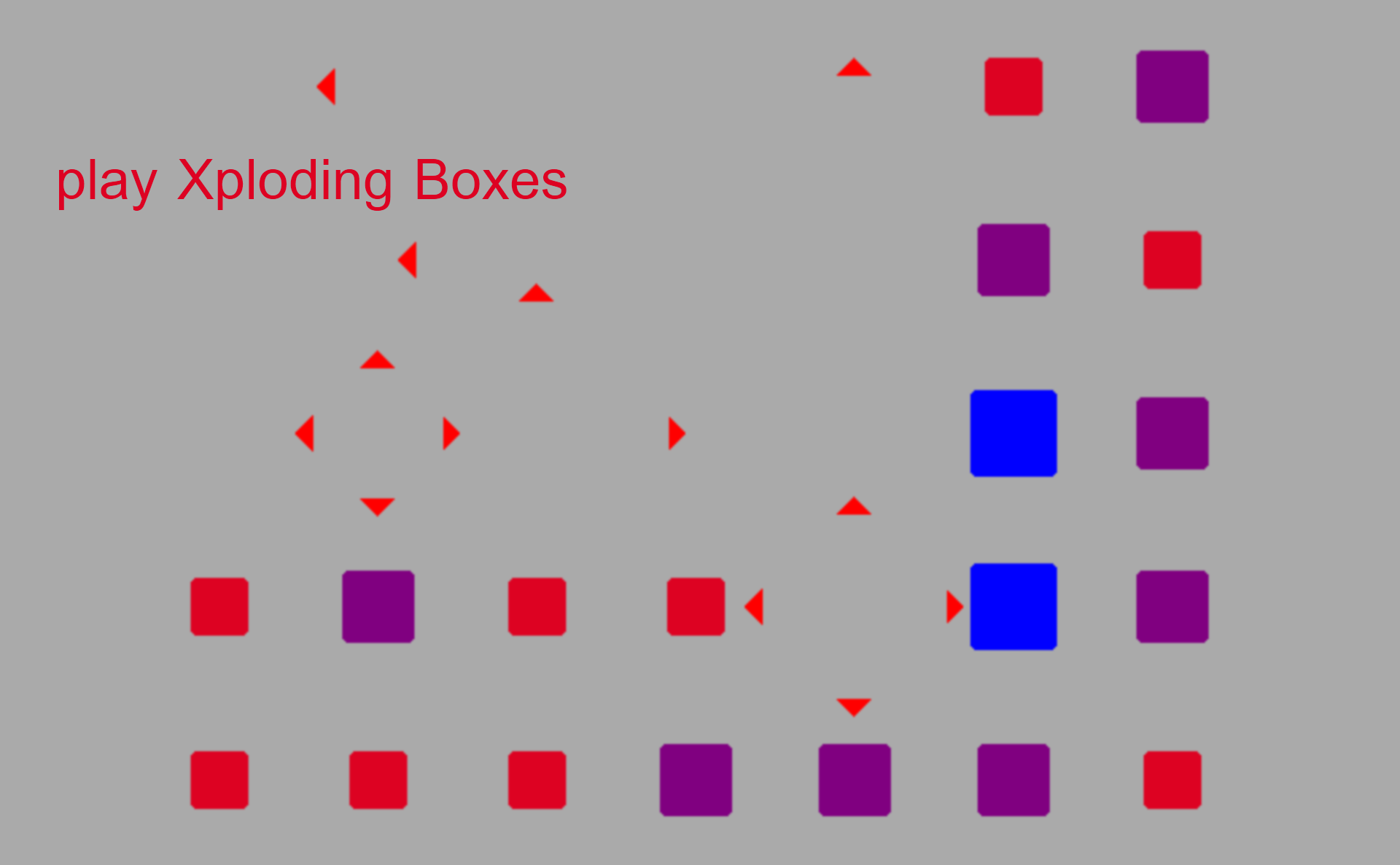
Xploding Boxes is a strategy game for BlackBerry, Android, and Nook, where the goal of the game is to start a chain reaction that will explode all of the boxes on the screen. Each level gives you a different number of touches, and requires a different strategy to solve.

Links & Information

Apps for the Dev Alpha

With the most recent update to the BlackBerry DevAlpha, BlackBerry AppWorld is now included so that developers can download and purchase apps from each other through the store front. As a result, version 2.0 of Runaway Trains (which was just released last week), is one of a dozen games available for the BlackBerry DevAlpha.

However, most of my apps for BlackBerry 10 will not be available through BlackBerry AppWorld until closer to the launch of BlackBerry 10 early next year. Porting all of my PlayBook apps over to the Dev Alpha would go very quickly, but there is no reason to prematurely get all of the apps to be pixel perfect. There is still a long while to go until the launch of BlackBerry 10.

Runaway Trains adds support for BlackBerry phones

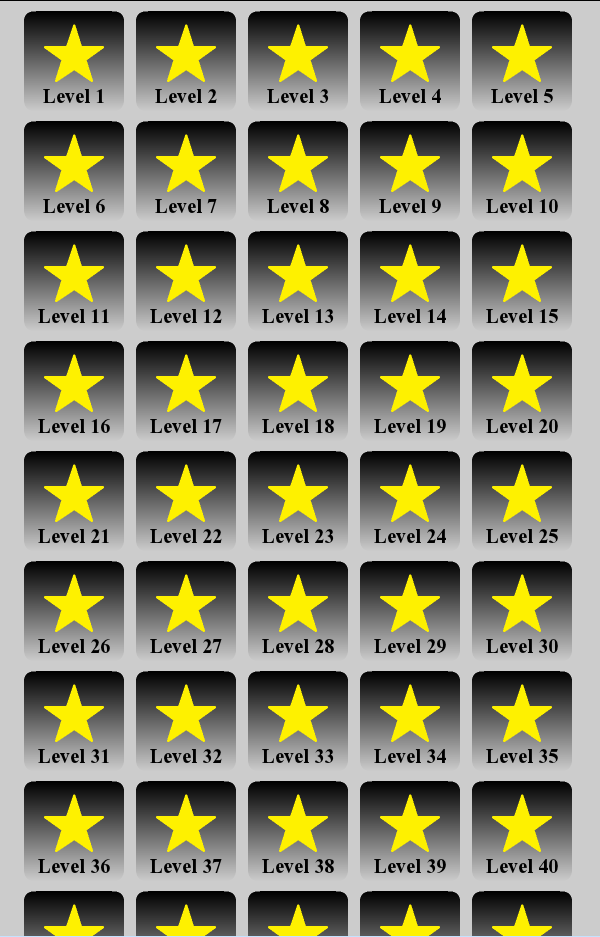
The puzzle game, Runaway Trains has been updated to version 2.0. This update adds support for BlackBerry touchscreen phones running OS 6.0 or higher. Additionally ten new levels were also added, and the level selection screen received a visual make over.

After launching on the PlayBook earlier this year, Runaway Trains is now also available on BlackBerry and Android phones including the Dev Alpha. In the game, the first 25 levels are free, while you can use an in-app upgrade to get access to the rest of the levels for just $2.99 USD. If you have already purchased the upgrade on the PlayBook you will be able to get access to all of the levels for free on the phones (and vice versa). Additionally if you purchase access to all of the levels now, your purchase will also give you access to the game on BlackBerry 10 phones when the launch next year.

About Runaway Trains

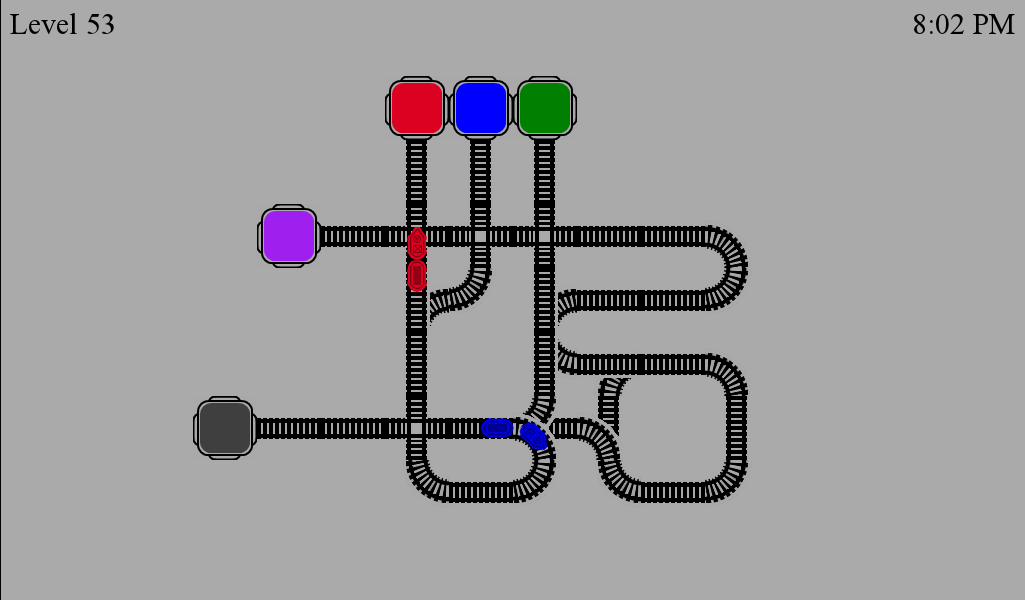
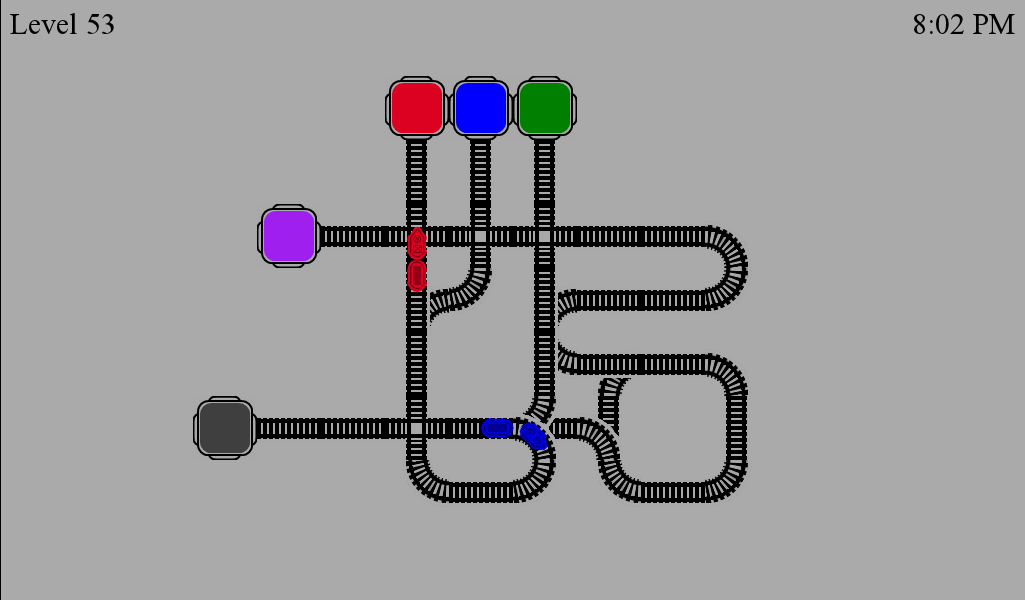
Runaway Trains is a colorful strategy game for all ages where you must route the trains to the proper station. Each level progresses in difficulty and presents an unique puzzle which you must solve by finding a way to guide the coloured trains causing a collision or running out of track.

This is done by touching the intersections to toggle the open path of the tracks. If at any time the trains crash or end up at the wrong station, you will have lost and have to try again.

Links & Information

Android app on Google Play

RIM needs to remain wary of wireless carriers

Occasionally in interviews, executives at RIM have mentioned how excited that wireless carriers are about BlackBerry10. However, this has me more worried than excited, because the carriers have not always had RIM’s best interest at heart.

For example, there are reports that the carriers are actually happy that BlackBerry10 has been delayed to Q1 2013. This is probably true. A Q1 release of BlackBerry10 gives the carriers something new to push in a quarter when they typically won’t have much else new on their shelves. It allows the carriers to hedge their bets on BlackBerry10 by promoting it during a more low key part of the year as opposed to the busy Christmas season. But just because it is good for the carriers does not imply that the delay is also good for RIM. Of course in this case, the delay may be good for RIM, by giving them the time needed for a solid launch, but it better not be done for the carrier’s sake.

In the past the carriers have been a problem for RIM. By depending upon the carriers to approve OS updates, RIM could not update devices in a timely manner (especially compared to Apple). Caving to requests from Verizon also led RIM to release the Storm and Tour without wi-fi. A few to many deals with the carriers also lead to RIM never offering a touch screen BlackBerry on more than one US carrier at a time until less then a year ago. (And RIM wonders why they have so little of the touchscreen market in the US).

For the rollout of BlackBerry10, RIM needs to remove the carriers from OS upgrades. RIM needs to keep the devices clear of the shovelware that plagues Android. RIM needs to launch across all carriers within the same month. While the wireless carriers are important retail channels, they are actively working against RIM whenever they try to be more then dumb pipes. Caving to the carriers would put RIM at a disadvantage to Apple and Microsoft.

The doldrums of BlackBerry development

The next few months are going to be a tough time to be a BlackBerry developer. With the traditional BlackBerry OS being phased out, and BlackBerry 10 not yet available, developers are stuck in a middle ground without any clear path.

App developers are dependent upon the long tail of sales in order to make a living from creating apps. Sales of an app within the first month are insignificant when compared to sales over a year or two. While this can be discouraging to new developers it is actually a source of comfort to developers with a few apps already up for sale as it can lead to a bit of steady income. Over three years after its release, I know that I can count on Pixelated to continue to generate some sales.

The problem, of course, is that the current BlackBerry OS no longer has much of a long tail. It has already been almost a year since RIM has released any new and interesting hardware, and RIM will not be releasing a single new device that is capable of running applications built for the current BlackBerry OS. Without much of a real possibility of continuing sales over the next few years it is hard to commit the time to a significant new BlackBerry project at this time.

The future is BlackBerry 10. But without any BB10 devices presently up for sale, and with the marketshare of BB10 phones at 0.0% for at least the next six months there is currently no opportunity to sell apps on BB10 either. While there is a benefit to being ready to go for the launch of the platform, there will be plenty of time to do so in the future (and at this point, little reason to jump in before the tools are gold). Because while app development is all about the long tail, you can’t justify doing work now that you won’t get the opportunity to be paid for in the next year.

This gap between the two platforms (which was made worse by the delay in the launch of BlackBerry 10) is leaving BlackBerry developers in a bit of a doldrums over the next few months.

So what options do devs have? There are some environments such as WebWorks and ActionScript that support both BlackBerry 10 and the current PlayBook, but the next few months are also going to provide an opportunity to spend time on updating current apps, and expanding to more platforms.

(And of course, despite everything I said above, my PlayBook game, Runaway Trains will be released for touchscreen BlackBerry phones within the next week or two.)
PlayBook outperforming for App Sales

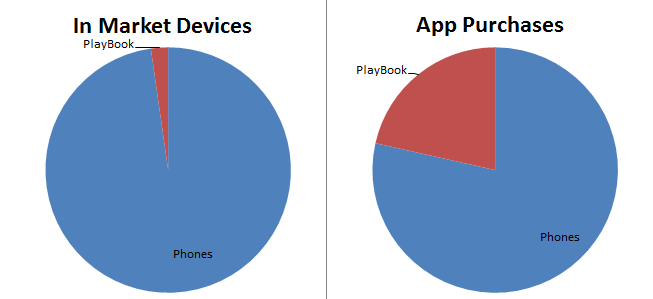
In terms of in-market devices, the number of BlackBerry phones being used is much larger then the number of PlayBooks being used. However if you look at app sales, the overall difference is much smaller.

It is unclear if this difference is due to the larger screen size, the different demographics of the userbase, or the ease of use of purchasing and installing apps on the QNX based OS.

Xploding Boxes adds portrait orientation support for PlayBook

Xploding Boxes has been updated in BlackBerry AppWorld and the Nook Bookstore to version 3.4. This new version adds an additional 10 levels while also adding support for multiple orientations on the BlackBerry PlayBook. The level selection page on the tablet has also been reskinned to match the gradients found on the phone version of the game.

About Xploding Boxes

Xploding Boxes is a strategy game for BlackBerry and Nook, where the goal of the game is to start a chain reaction that will explode all of the boxes on the screen. Each level gives you a different number of touches, and requires a different strategy to solve. The first 25 levels are free, while the full 300 levels can be accessed by making an in-application payment and requiring no further downloads. This game is available for the PlayBook, most smartphones running OS 5.0 or higher, and the Nook Color and Nook Tablet.

New in Version 3.4

This update adds an additional ten levels, bringing the total number of levels up to 310. Additionally the PlayBook got a visual refresh to the level selection screen, and now supports portrait orientations in addition to landscape.

Links & Information

Three Years

Three years ago today I sold my first BlackBerry application. In the morning I posted Pixelated Plus for sale in AppWorld, and by the end of the day it had been purchased by three people. It has sold a lot more copies since then.

Back on May 31st, 2009 BlackBerry AppWorld was less then two months old, and not preinstalled on any devices. Pixelated Plus at the time was exclusive to the BlackBerry Storm and had no free version available. So three sales on the first day seemed pretty good. Of course the next day, I didn’t sell any.

At the time the magic number was 93. That was the number of copies of Pixelated Plus that I needed to sell in order to break even on the $221 that it cost me to get into the store. At the time I was nervous about my ability to make back that investment.

Needless to say, but it has paid off. In 2010 I left my job in order to make silly little games full time. So thank you to everyone who has supported me over the past three years. There is no other “job” that I would rather have.

Runaway Trains gains 10 more levels

Runaway Trains has been updated in BlackBerry AppWorld, the Nook Bookstore, and on Google Play. This new version improves graphics for the Android version of the game, and adds 10 new levels, which brings the total number of levels to 130.

About Runaway Trains

Runaway Trains is a colorful strategy game for all ages where you must route the trains to the proper station. Each level progresses in difficulty and presents an unique puzzle which you must solve by finding a way to guide the coloured trains causing a collision or running out of track.

This is done by touching the intersections to toggle the open path of the tracks. If at any time the trains crash or end up at the wrong station, you will have lost and have to try again.

Links & Information

Android app on Google Play

Every bug is your fault

When you write software you need to take responsibility of any bug that users might blame you for. No matter if it is your fault or not. If the end users think it is your fault, then you should take responsibility to fix the problem no matter where it actually lies.

As posted by Brandon Bloom:

When you run a business, if your software has a bug, your customers don’t care if it is your fault or Linus’ or some random Rails developer’s. They care that your software is bugged. Everyone’s software becomes my software because all of their bugs are my bugs. When something goes wrong, you need to seek out what is broken, and you need to fix it. You fix it at the right spot in the stack to minimize risks, maintenance costs, and turnaround time. Sometimes, a quick workaround is best. Other times, you’ll need to recompile your compiler. Often, you can ask someone else to fix it upstream, but just as often, you’ll need to fix it yourself.

True hackers have come to terms with a simple fact: If it runs on my machine, it’s my software. I’m responsible for it. I must understand it. Building from source is the rule and not an exception. I must control my environment and I must control my dependencies.

Although this attitude needs to extend beyond dependencies, and also cover things like your distribution.

Twinkle updated to version 4.1

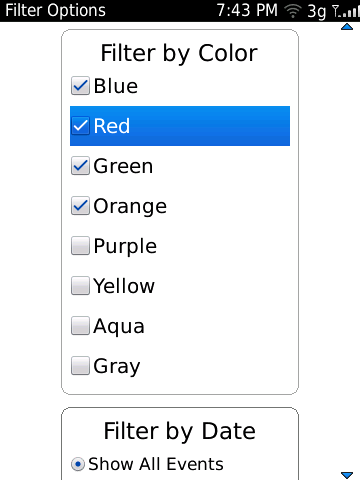
Twinkle has been updated to version 4.1 in BlackBerry AppWorld. The biggest new feature in this version, is the ability to filter your view, to only show events that are a given color, or a certain date. You can also now permanently delete synced events, and some elements have had their visual appearance improved.

About Twinkle

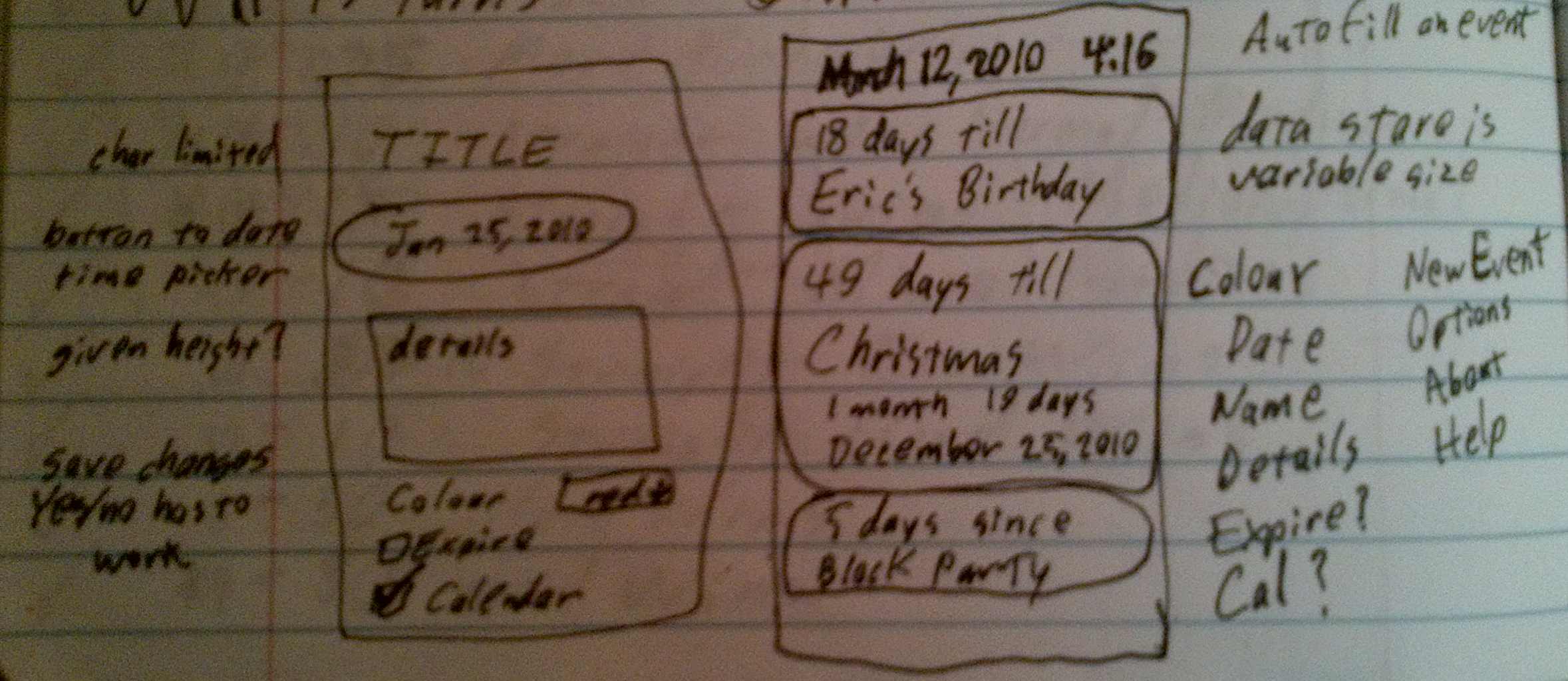
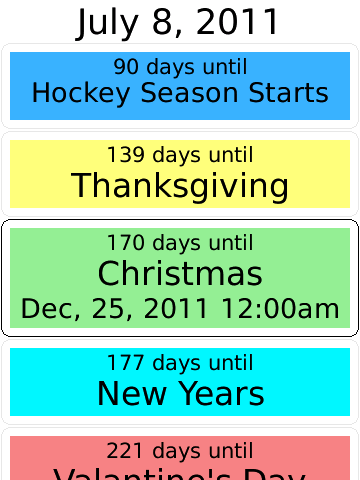
Twinkle is an app that allows you to set and keep track of upcoming and past events. Twinkle will tell you how far away an event is, and share it with a friends through BBM, Facebook, and Twitter. Additionally Twinkle offers full integration with the native calendar, allowing you to either synchronize events, or to import/export them from one app to another.

New Filtering options

A new “Filter Options” listing has been added to the menu to allow you to filter the events that you see. You have the option of filtering events based on the background color assigned to the events. You can also set up filters based on the date of the event, showing either all dates, events in the past or just events in the future.

Links & Information

Benefits of Carrier Billing in the UK

After looking at the benefits of carrier billing in the United States and Canada last month, I have now run the numbers for the UK. The results are pretty similar.

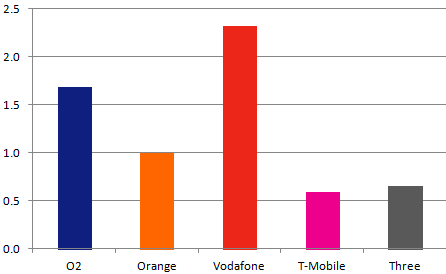
Comparative purchase rates for Pixelated Plus are shown in the above chart for the five largest carriers in the United Kingdom. Of these carriers, only O2 and Vodafone support carrier billing. Across all of these carriers, customers who have access to carrier billing are 2.3 times more likely to make a purchase. For a developer, a customer on Vodafone is worth almost the same as four customers on T-Mobile.

Similar to the statistics for US carriers, the measurements in this chart are relative to the number of purchases at Orange (the largest carrier without carrier billing), such that Orange would always have a value of 1.00. The number of purchases is based upon purchases of Pixelated Plus from January-March 2012. Normalization for carrier size was based on data from the free application Pixelated over the same time period. All data was collected through BlackBerry AppWorld at the time of download.