A brand new app has just been released in order to help you navigate the Champlain Canal in upstate New York. The app can be download from BlackBerry World, Google Play, and the Amazon Appstore.
With apps having already been released for the Erie Canal, Cayuga-Seneca Canal, and Oswego Canal there are now apps available for navigating the whole New York State canal system. These apps give you the ability to see the locations of all locks and boat launches along the canals. Additionally the apps also contain a map view to give a visual representation to where everything is.
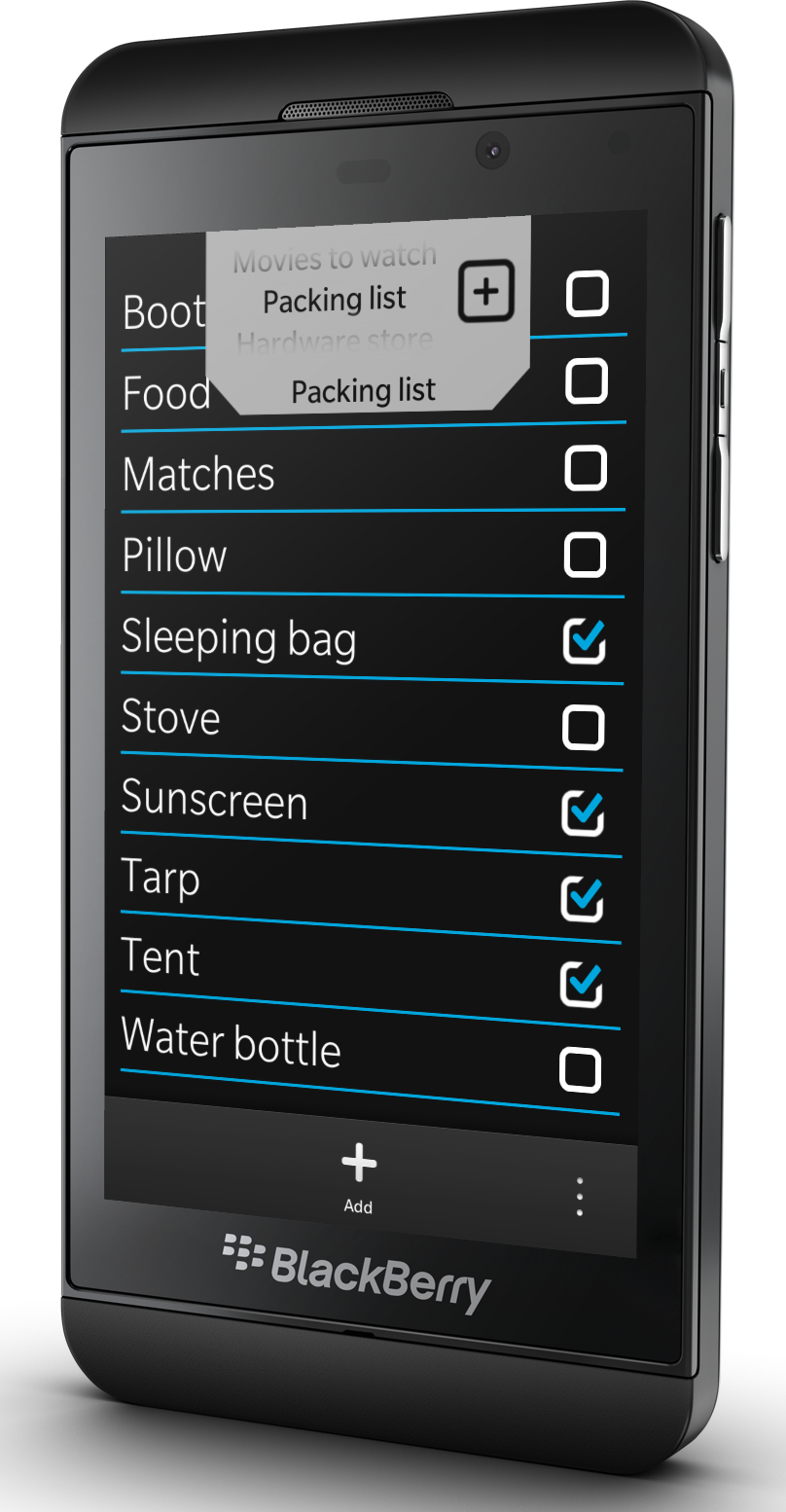
The Stuff I Need check list app has been updated to version 2.5 for BlackBerry and Android. For BlackBerry 10 users the app makes a few visual tweaks, support for the BlackBerry Passport, and has also been optimized to give the app a 15% reduction in file size. For Android users the newest version of the app allows you to set a custom text size, which is a feature that was added to the BlackBerry version of the app last summer.
Amazon Appstore
The Android version of the app is also now available in the Amazon Appstore.
About Stuff I Need
Originally conceived as a grocery list app, this minimalistic checklist app can be used to keep track of the stuff you need to get, or the stuff that you need to do. New items can be added to list with the ‘Add’ button on the bottom of the screen. Items on the list can be edited (or deleted) by giving them a long press. Lists can be switched by pulling down on the tab at the top of the screen. This will expose a spinner that shows all of your current lists. New lists can be added by using the “+” button on the right side of the expanded tab. Making use of three or more lists requires the use on a one time in-app purchase. Lists are automatically deleted if you delete all items in a list and restart the app.
Since first releasing the BlackBerry 10 SDK in early 2012, BlackBerry has continued to work on improving their tools. I have recently discovered that significant optimizations are made in newly created Cascades projects. I am currently working on an update to my Stuff I Need app, and have been able to get a 17% reduction in the app’s file size simply by recreating the project from scratch in Momentics. In addition to the smaller install size, the app also appears to be launching quicker. This was done with no changes at all to my code. Using all of the same assets, qml, and c++ files, I created a new project, and then copied my existing files in. The new project contains a few changes to the .pro and the bar-descriptor.xml files, but the majority of the changes seem to be taking place behind the scenes. So for anyone that has been writing BlackBerry Cascades apps for a while now, it may be worth it to recreate your apps and get some free optimizations to your code.
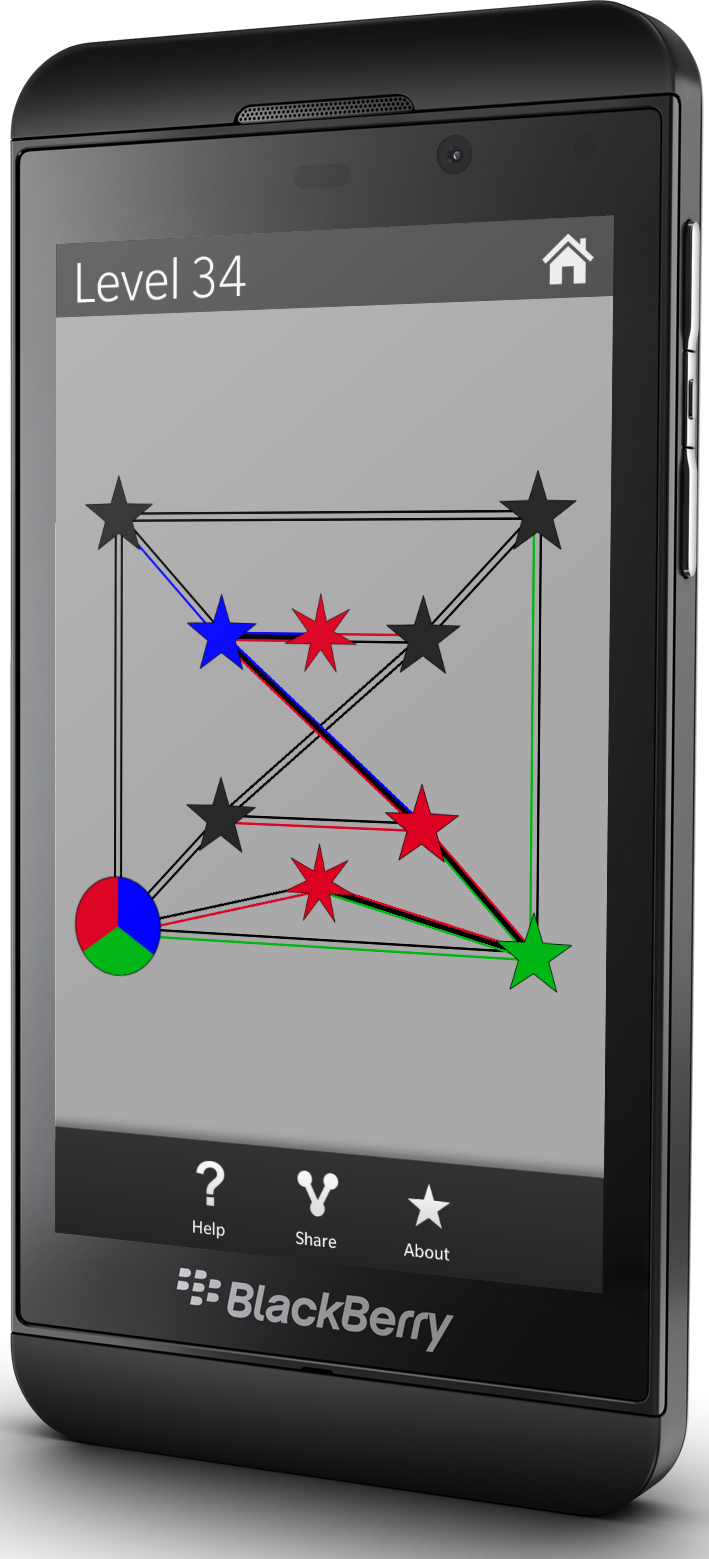
Starbeams has been updated to version 1.8 for BlackBerry 10 and Windows 8. This update adds an additional ten levels, and also adds support for the soon to be released BlackBerry Passport.
About Starbeams
The object of the game is to assign colors to each star in order to ensure that none of the stars are connected to another star of the same color. The game starts off easy, but quickly gets more complex, adding more colors and seven pointed stars that can not be changed.
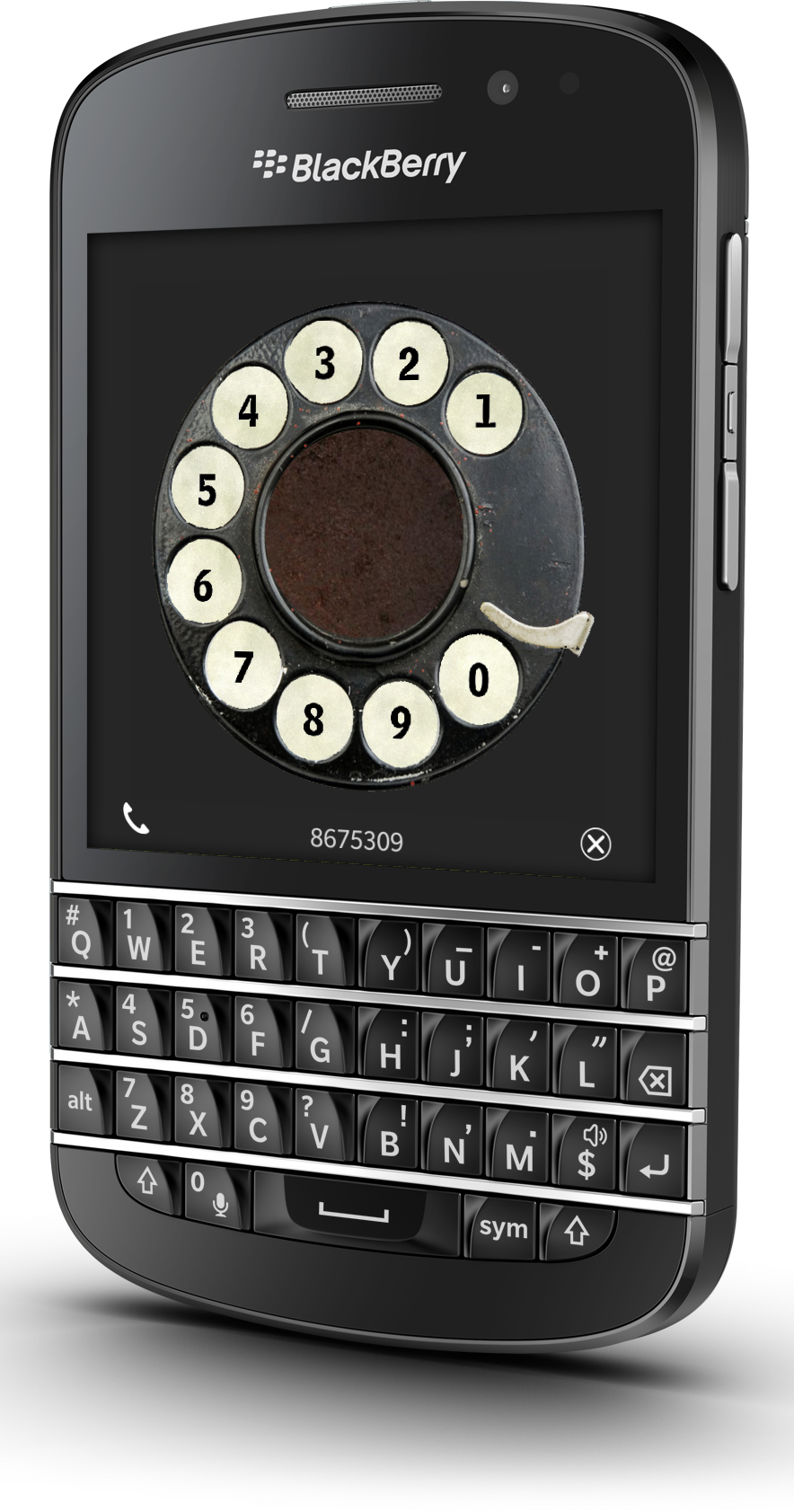
The Rotary Phone app has just been updated to version 1.1 in BlackBerry World. This app sends your phone back in time, and gives you a classic rotary interface from which to dial out numbers. There is even a setting that allows you to automatically dial out after seven or ten digits have been entered. The new version of the app has an install size that is 14% smaller, and also adds support for the soon to be released BlackBerry Passport.
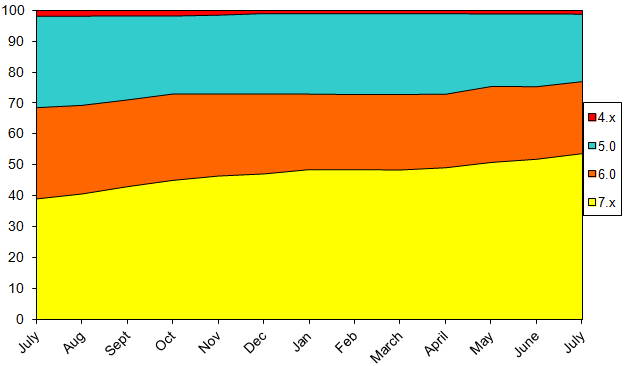
In the past month there has been a two percentage point increase in the number of users on the traditional BlackBerry OS using OS6+ and OS7+. The growth curve still lags significantly behind that of BlackBerry 10, but there has been some consistent growth for a few months in a row now.
July saw 53.87% of users running BlackBerry OS 7.
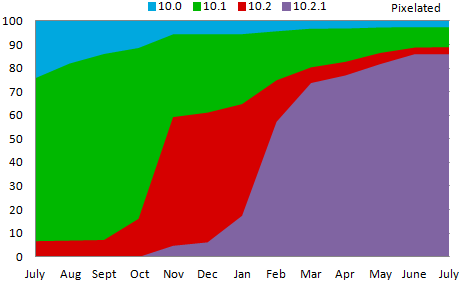
This data was collected by BlackBerry World for downloads of the free BlackBerry strategy game Pixelated. Data shown on the chart is from the beginning of July 2013 through the end of July 2014, and does not include BlackBerry 10 or PlayBook devices.
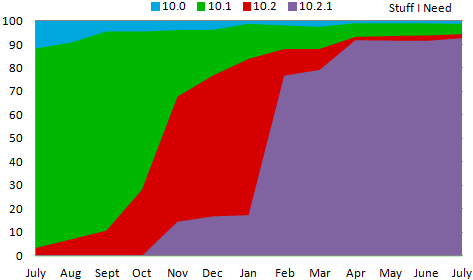
While the newest version of the BlackBerry 10 operating system has had very good adoption rates (especially compared to BBOS and Android), the pick-up rate of OS 10.2.1 is starting to level off. In the month of July, Pixelated saw 86% of downloads come from users running the newest version of the OS, while the Stuff I Need app saw 93% of users fully upgraded. These numbers are only up slightly from June.
Overall these numbers are still very good, but it looks as if it may take some time until the final 10% of users upgrade their phones.
This data was collected by BlackBerry World for downloads of the free strategy game Pixelated and the free checklist app Stuff I Need. Data shown on the chart is from the beginning of June 2013 through the end of June 2014.
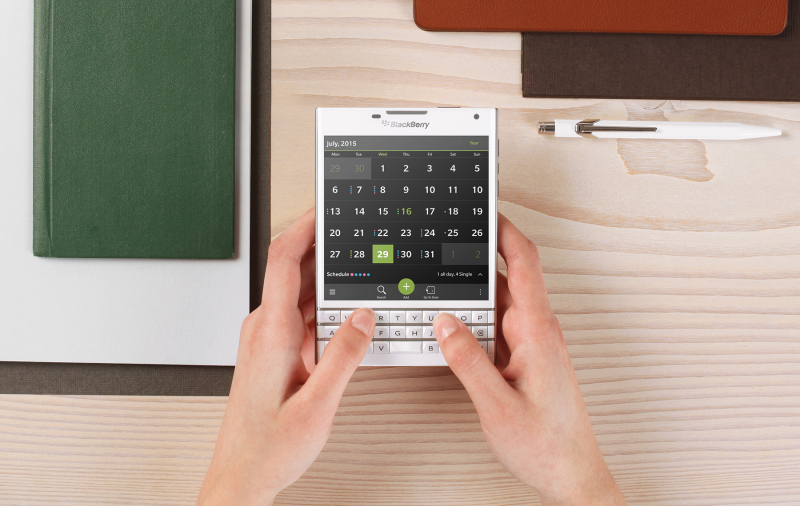
The BlackBerry Passport is due to be released this September, and the phone’s 4.5 inch screen is much bigger than it first appears to be. Mainly this is due to the fact that the Passport will have a square screen as opposed to the 16:9 ratio that dominates the industry. The tradition of measuring screen sizes based on the diagonal favors widescreen formats (and may be part of the reason that BlackBerry and Apple both moved their phones from 4:3 screen ratios to their current 16:9 ratios). Measuring instead by area, the screen of the BlackBerry Passport is equivalent to a 4.9 inch widescreen phone.
The table below compares the Passport to other BlackBerry phones, giving the area in square inches and then a comparison to the size of the Passport.
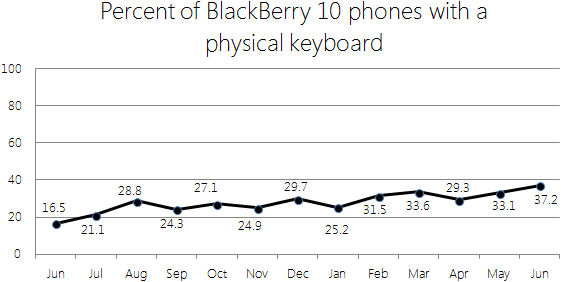
This past month the percentage of BlackBerry 10 users with a physical keyboard reached an all time high at 37.2% of the market. This number has been trending upwards for the past half year, and is only likely to accelerate when the BlackBerry Passport and Classic launch in the fall.
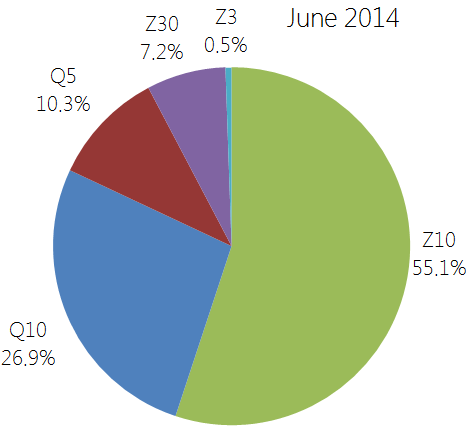
Currently the BlackBerry 10 ecosystem is still dominated by the BlackBerry Z10 which accounts for 55.1% of BlackBerry 10 phones in use. The most popular keyboard device is the BlackBerry Q10, but the Q5 has also seen a sudden boost in popularity, after lagging behind the Z30 for most of its life.
All of these statistics are based off of the data collected by BlackBerry World for downloads of the free check-list app Stuff I Need (which is now also available for Windows Phone and Android users).
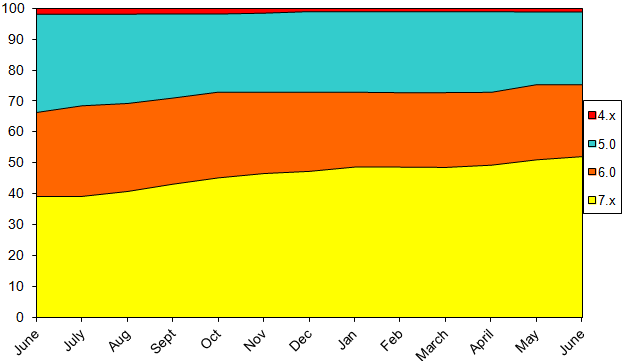
OS 7 now consists of 52% of the BBOS market. This is a very slow uptake when compared to BlackBerry 10, but at the same time it is continuing to inch forwards.
This data was collected by BlackBerry World for downloads of the free BlackBerry strategy game Pixelated. Data shown on the chart is from the beginning of June 2013 through the end of June 2014, and does not include BlackBerry 10 or PlayBook devices.
BlackBerry 10 has seen a continuing slow uptake of newer OS versions in the month of June.
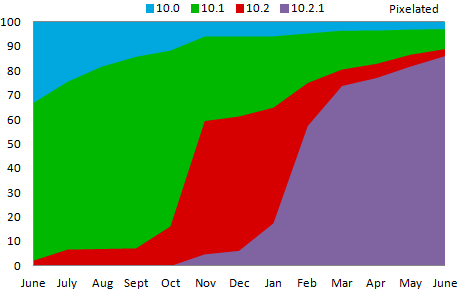
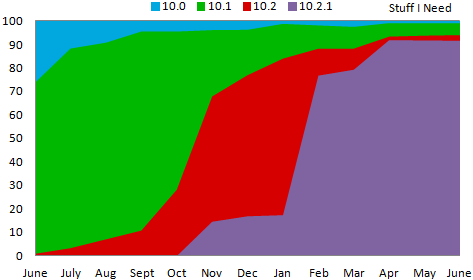
Pixelated saw 86% of users on the newest OS version, while the Stuff I Need app had 92% of their users on the newest OS.
This data was collected by BlackBerry World for downloads of the free strategy game Pixelated and the free checklist app Stuff I Need. Data shown on the chart is from the beginning of June 2013 through the end of June 2014.
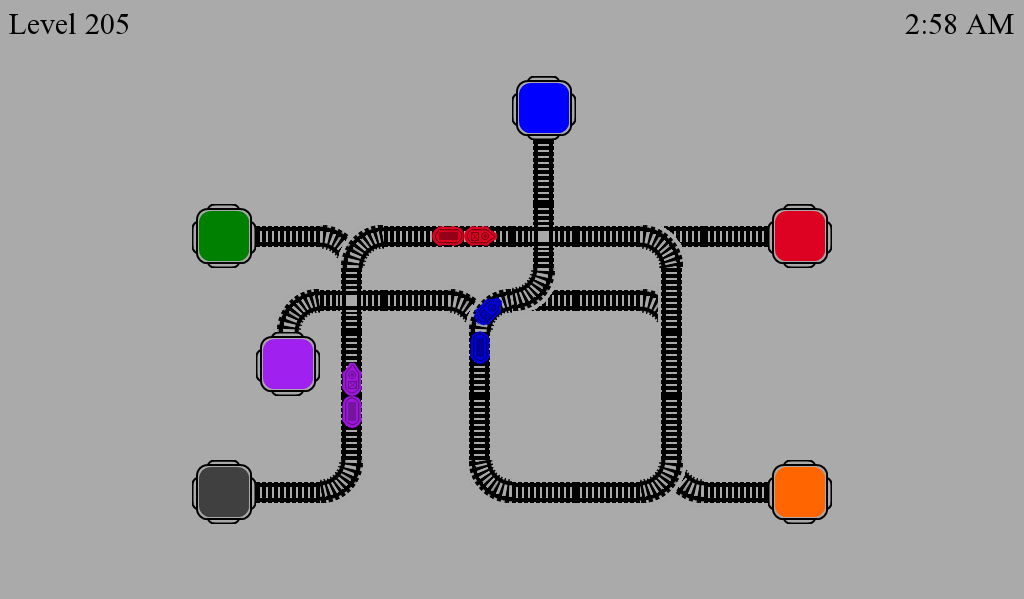
Runaway Trains is a colorful strategy game for all ages where you must route the trains to the proper station. Each level progresses in difficulty and presents an unique puzzle which you must solve by finding a way to guide the coloured trains causing a collision or running out of track.
This is done by touching the intersections to toggle the open path of the tracks. If at any time the trains crash or end up at the wrong station, you will have lost and have to try again.
Black Out has been updated to version 1.4.1 in BlackBerry World in order to ensure compatibility with devices running OS 10.3.1 (which will be released later this year). The PlayBook and Nook versions of the app do not require this update, and Android versions of the app have already been updated earlier this year.
How to Play
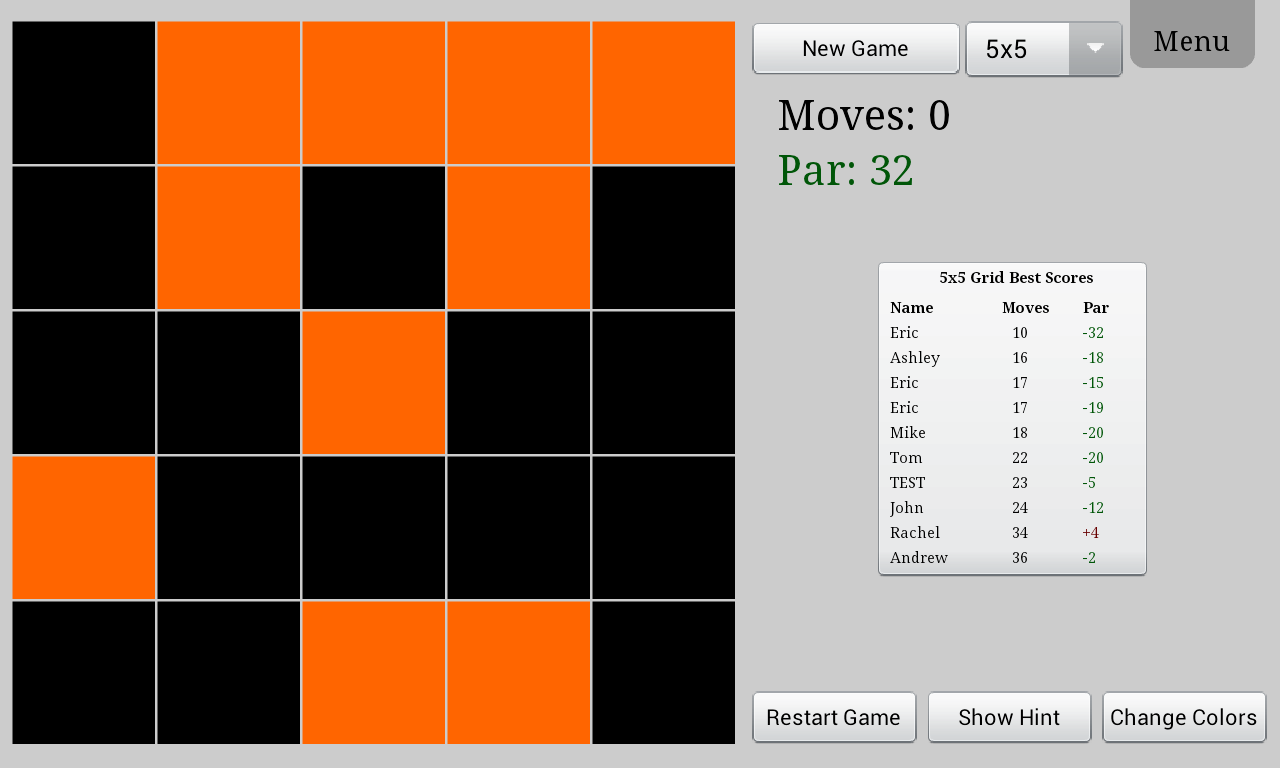
The goal to Black Out is to tap the tiles, so that they all get ‘blacked out’. This is complicated because whenever you tap to flip a tile, it also flips all of the tiles surrounding it. As such it requires a well laid out strategy.
In order to accommodate different difficulties, the game supports board sizes from 3×3 all the way up to a 10×10 grid. Furthermore, there is also a hint button in case you find yourself in need of help.
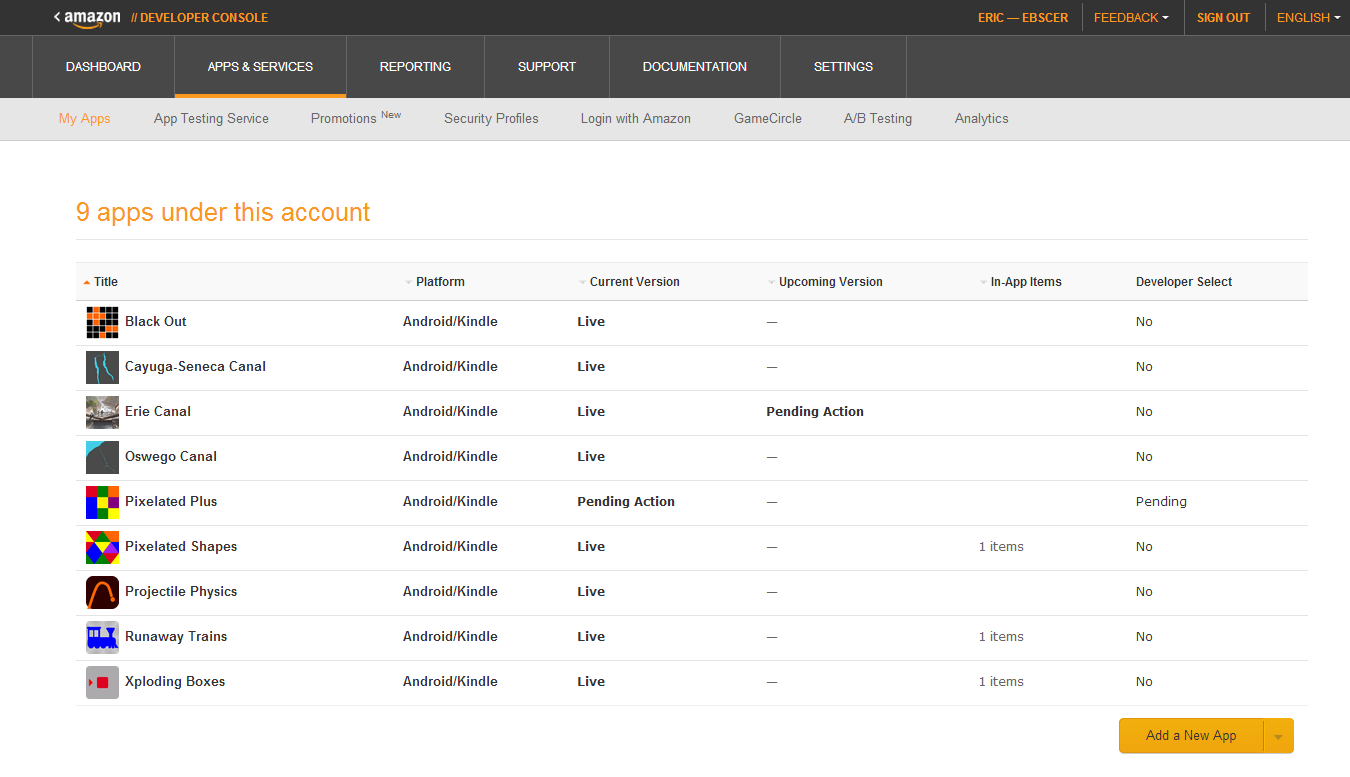
As BlackBerry prepares to have the Amazon appstore preinstalled on their phones, I have already had my apps in the Amazon store for two years now.
First of all the best place to have your apps is in BlackBerry AppWorld. If you are writing a native Cascades app, there is no choice except to sell your apps through the BlackBerry store. If you are selling an app based on a cross platform framework such as Cordova or Unity you are better off compiling that code natively to a .bar file as it will run much better then packaging the same code as an Android app. If you have a native Android app, then you are still better off compiling to a .bar file and submitting the app to BlackBerry World. Taking this extra step makes the app easier for users to update and also gives developers the possibility of removing the back bar from apps.
However, simply having the ability to sell to Amazon’s own tablets and phones is enough reason reason to submit your apps into the store.
For the most part the Amazon store is pretty similar to what all other platforms offer with developers getting a 70% cut of all sales. Payments are made out to developers via direct deposit to a bank account. All apps are submitted as .apk files and like Android apps on BlackBerry, they must not be dependent upon any Google Play services. All apps submitted to the Amazon Appstore require a minimum of three screenshots (at one of a few specific resolutions), and are subjected to a rather comprehensive review policy. App reviews typically take around five days, with rejections usually a case of including a reference to the Google Play store (including something as simple as a link to your other Android apps).
The high praise that BlackBerry has given the Amazon store is mostly marketing fluff. The truth of the matter is that nobody cares about Amazon coins, and this store really isn’t all that different than all of the others…
Adding to the set of New York State canal apps, an app for helping to navigate the Oswego Canal has been released to BlackBerry World and Google Play.
Similar to the apps for the Erie Canal, and Cayuga-Seneca Canal that have been released earlier this year, this is an app that gives you the ability to see the locations of all locks and boat launches along the canal. Additionally the app also contains a map view to give a visual representation to where everything is.
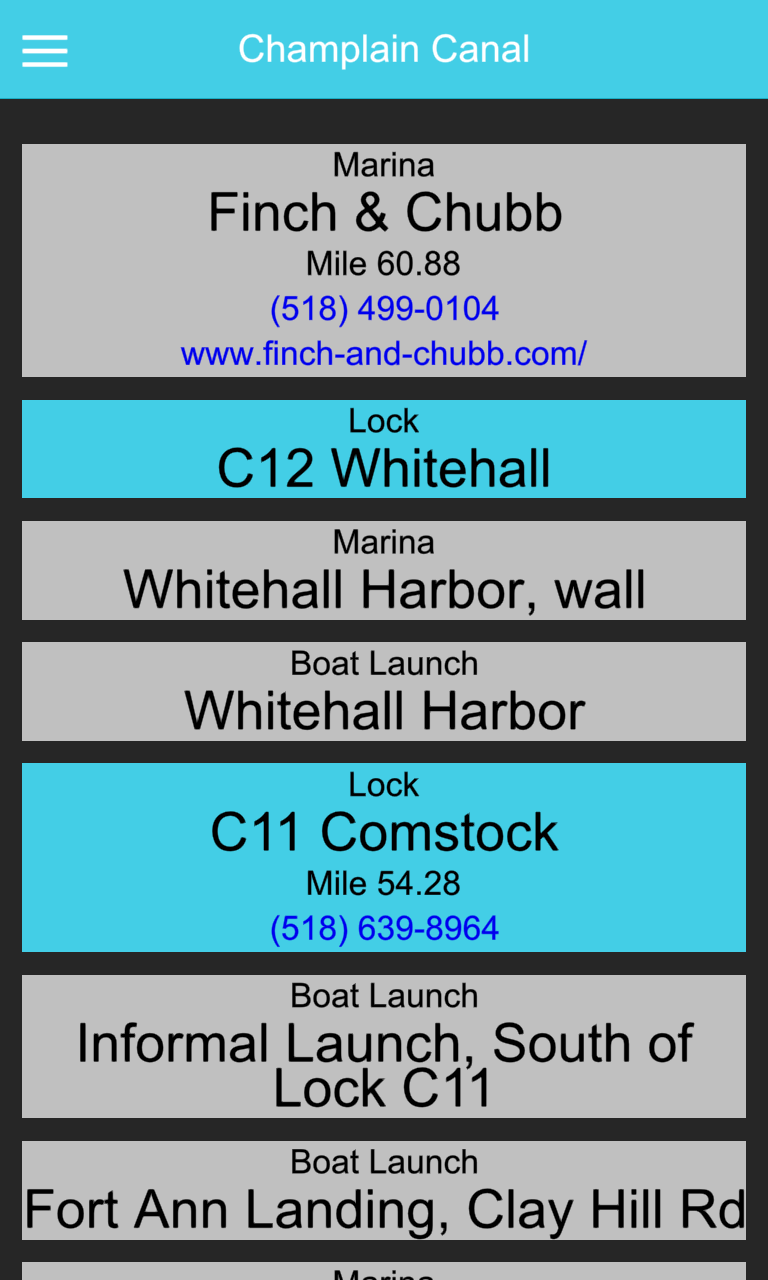 A brand new app has just been released in order to help you navigate the Champlain Canal in upstate New York. The app can be download from BlackBerry World, Google Play, and the Amazon Appstore.