Category Archives: BlackBerry

Smart phone adoption of newer OS versions remains slow and steady

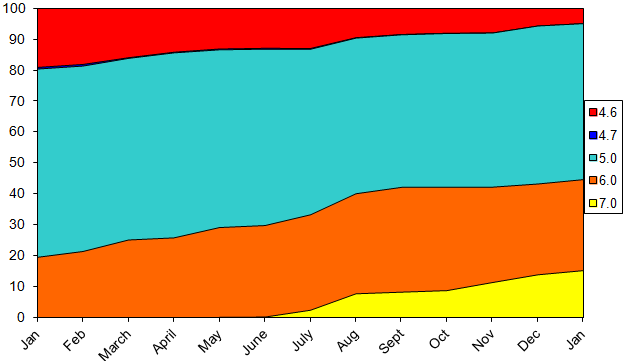
Adoption of OS 6 and 7 continued to grow at a slow but steady pace over the past month. 15.3% of users have OS 7.0+ and 44.8% of users have OS 6.0+.

Use of OS 5.0 and higher exceeded 95% for the first time in February. Use of older operating systems is down to less then a quarter of what it was just a year ago, and are almost gone for good. At this point developers should be thinking about cutting off support for devices with an OS version lower then 5.

This data was taken from downloads of the popular BlackBerry strategy game Pixelated. Data shown on the chart is from the beginning of February 2011 through the end of February 2012.

Pixelated Plus updated to Version 3.1

Pixelated Plus has been updated to version 3.1 in BlackBerry AppWorld. This update adds the ability to share your best scores on Facebook and Twitter on most devices running OS 7. For PlayBook and Nook users an additional option has been added to move the controls to the left side of the screen for easier left handed play. The updates also included a few other minor improvements.

About Pixelated Plus

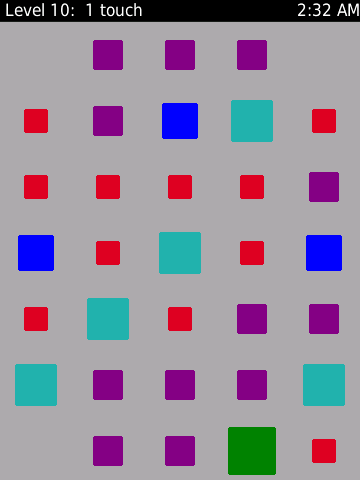
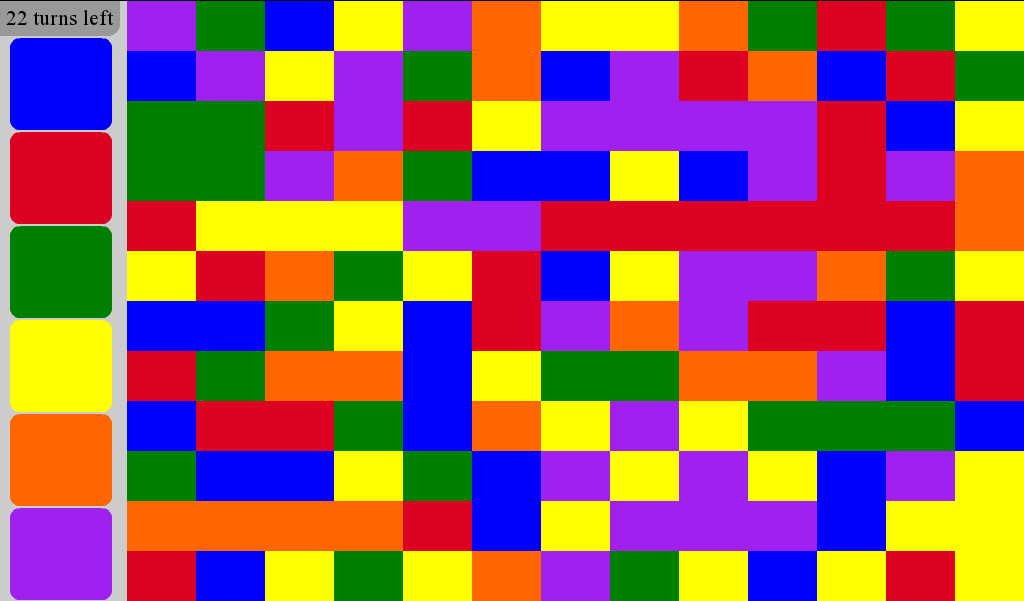
Pixelated Plus is an addicting puzzle based strategy game that requires a mixture of skill and luck in order to accomplish. The object of the game is to change the colour of the squares until the entire screen is a single solid colour. Starting with the square in the upper left corner you can change the colour of the blocks in order to match that of the surrounding squares. This is done repeatedly until the entire screen is a single colour. The object of the game is to clear the screen in as few moves as possible. Under the default settings you must do so in under 22 moves in order to win.

Links & Information


Rapid adoption of PlayBook OS 2.0

After looking at past adoption rates on the PlayBook, it would be expected that the uptake of OS 2.0 on the device would be pretty fast, especially given that this was a major version number update. This turned out to be the case, and even more impressive then I expected.

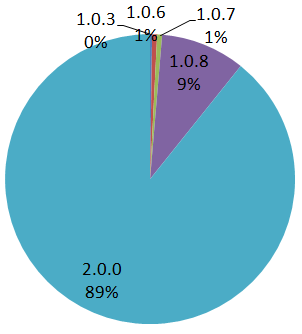
The chart below shows PlayBook OS versions on February 22nd based on downloads of the game Pixelated.

PlayBook OS 2.0 was released on February 21st. Over 89% of users had already upgraded by February 22nd. By the end of March, I would expect over 99% of users to be running the new operating system.

On the old BlackBerry OS, it took 23 months for 89% of users to be running OS 5.0 (or higher), yet the PlayBook was able to hit this percentage less then 23 hours. So far the BBX operating system is showing itself to be thankfully free from any OS fragmentation issues.

Binary Clock updated

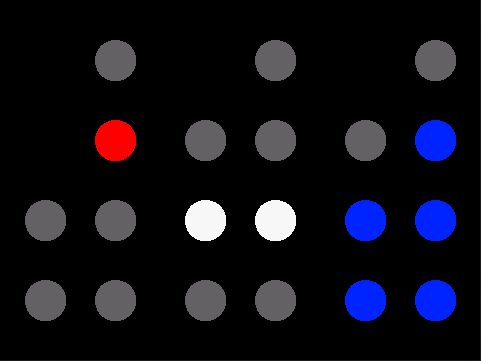
The Binary Clock application has been updated to version 2.1 in BlackBerry AppWorld. This update adds the option to place the clock in a 12 hour mode instead of the default 24 hour mode. You can also now turn off the screen while the phone is charging, by using the lock screen button. To be able to set the clock to display while the phone is charging you will need to make a $0.99 in-app purchase.

How to read

A binary coded decimal can be read with each column added up with each light worth (from top to bottom) 8, 4, 2, and 1, and the column on the left being worth 40, 20, and 10. This is done with each set, which (from left to right) are for hours, minutes, and seconds. For example, the clock to the right shows a time of 4 hours, 22 minutes, and 37 seconds. For more information on reading Binary Coded Decimals see Wikipedia.

Links & Information

Update to Call-A-Human app

The Call-A-Human application has been updated to version 1.4 in BlackBerry AppWorld. This new version includes some updated listings as well as more polished options and about pages.

About the Call-A-Human app

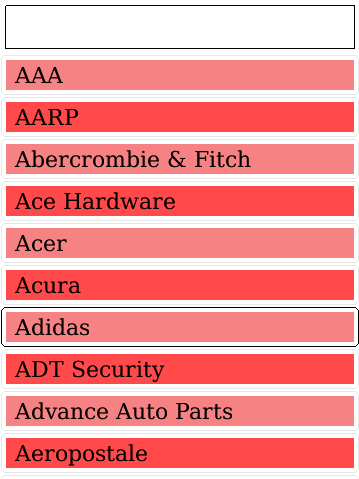
The Call-A-Human application allows you to easily call straight to a customer service person at hundreds of companies without having to go through the hassle of going through a phone tree. The application includes a built in search field, and also integrates with universal search so you can just start typing the company name into your BlackBerry without even having to launch the application.

Links & Information

The Media really does hate RIM

I have always been skeptical about the argument that the media intrinsically has it out for RIM, yet when OS 2.0 was released this past Tuesday I couldn’t help but notice the lack of coverage that the release received. Yet whenever there is a reason to criticise RIM there is never such a lack of coverage.

I understand that not every tech blog can cover everything. I realize that in the wide world of tech the release of this update may not be huge news. I never expected it to get covered absolutely everywhere. I did expect the story to get more coverage then something as trivial as RIM including a drawing of superheros on a blog post.

Apparently I was wrong.

With very little effort, it was shockingly easy to find many sources that gave more coverage (as measured by word count) to RIM’s superhero image, then to the release of their newest operating system.

Superheros PlayBook 2.0
Engadget 156 107
The Loop 18 12
Computer World 478 0
Daring Fireball 24 0
PC Magazine 681 425

If you don’t have anything mean to say, don’t say anything at all.

Scoble and Saunders are speaking different languages

This past weekend Robert Scoble posted on why he was pessimistic about the future of RIM, and was followed by a responce by Alec Saunders. However it is unlikely that the two of them are going to come to much of an agreement, because they are talking about two totally separate things.

Saunders’ response is about the many cross-platform development opportunities that BlackBerry provides. RIM has been pushing this approach for a while now with the PlayBook taking the approach that it should support as many development platforms as possible (similar to desktop Windows). Why should developers support BlackBerry? Anyone who has seen one of Alec’s presentations knows that he always emphasizes the ability for developers to make money on the platform. Stats about how the total amount of money spent in BlackBerry AppWorld is more then is spent in Android Market.

But to many in Silicon Valley (such as Scoble), this does not matter.

For the many venture backed start ups in silicon valley the goal is not to make money. The goal is not to increase revenue and make a profit. The goal instead is to find a company willing to spend money to buy them out. The goal is to find more wealthy backers willing to invest a few million in the hopes that it can later be sold for more. The ability to actually make money on a platform could not matter less.

Look back at Scoble’s original post. In it he says that “I just don’t see how most of the world’s “pro” development shops (I.E. the ones that are venture backed) will support more than Android and iOS.” Note the wording here. He doesn’t consider developers like myself to be professionals.

Yet I would argue that we are actually the ones going about and working to create serious businesses. And (with some exceptions) we are the ones that are most likely to support BlackBerry. For example EA, has never hesitated to support BlackBerry. This is not because it makes EA look good, and not because it allows them to put out a press release, but because it makes them money. EA isn’t running around town looking for investors or trying to find a buyer, instead they are simply trying their best to sell games for a profit.

For those companies that exist solely for the purpose of raising (and spending) another round maybe it is best to just support Android and iOS. Their only true customers are the managers at the venture funds. If your revenue only requires you to give a demo, supporting a single device is good enough. And many in Silicon valley have phones running Android or iOS. Yet like BlackBerry’s popularity in Canada, or Nokia’s dominance in Finland, the fact that Android and iOS are more common then average in the communities that surround Mountain View and Cupertino should be neither surprising nor meaningful.

So as long as Saunders and Scoble are talking about two different things it is unlikely that they are going to see eye to eye on the issue. So maybe RIM is not that relevant in the nonsense of Silicon Valley venture capital games. Who cares? For the most part these venture backed companies do not matter in the larger world at all. It would be (in all honesty) a waste of time for RIM to care what these “companies” think.

But for those of us who see our customers as the people who buy our apps and games, for those of us who actually care about growing a business, for those of to who more customers means more revenue instead of just more expenses, it would be silly not to support the millions of BlackBerry users.
Xploding Boxes after one year

Xploding Boxes was released a year ago for BlackBerry phones with 100 levels. Since then support has been extended for the BlackBerry PlayBook, and the Barnes & Noble Nook, and the game itself has expanded to 270 levels.

Even more impressive, is that Xploding Boxes has sold more copies in its first year then any other of my games including Pixelated Plus which has been on the market for almost three years.

About Xploding Boxes

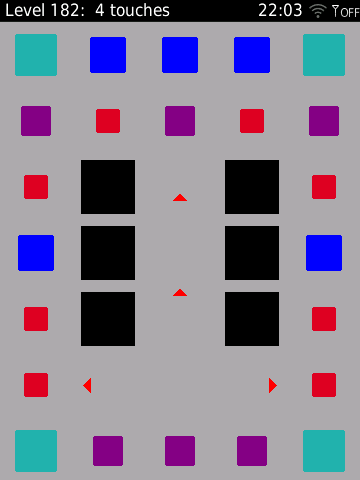
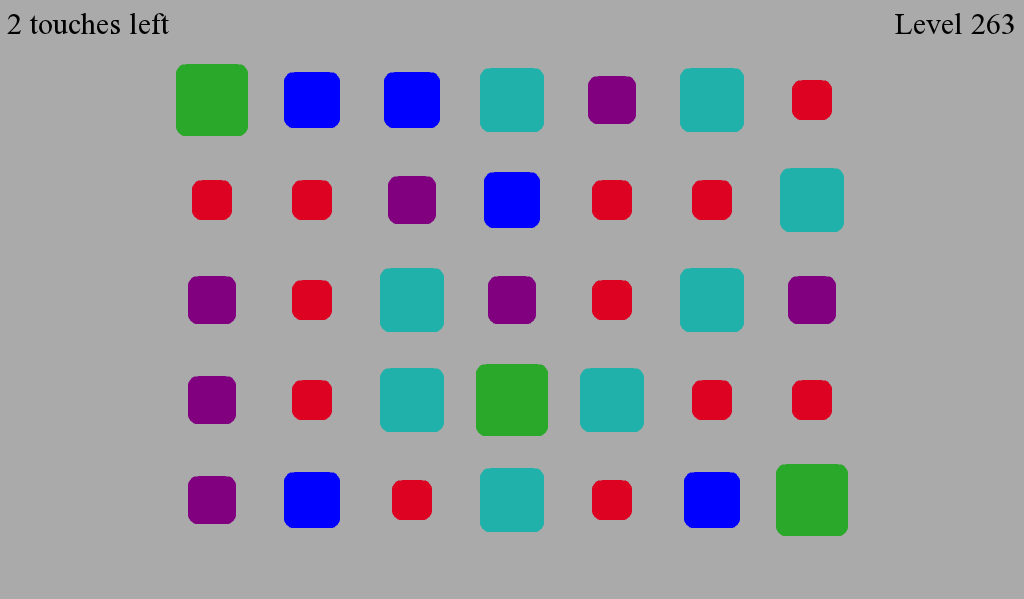
Xploding Boxes is a strategy game for BlackBerry and Nook, where the goal of the game is to start a chain reaction that will explode all of the boxes on the screen. Each level gives you a different number of touches, and requires a different strategy to solve. The first 25 levels are free, while the full 270 levels can be accessed by making an in-application payment and requiring no further downloads. This game is available for the PlayBook, most smartphones running OS 5.0 or higher, and the Nook Color and Nook Tablet.

Links & Information

Xploding Boxes updated

Xploding Boxes has been updated in BlackBerry AppWorld, and the Nook Bookstore to version 3.1. This update adds 10 additional levels, and improves the support for devices running OS 7.1.

About Xploding Boxes

Xploding Boxes is a strategy game for BlackBerry and Nook, where the goal of the game is to start a chain reaction that will explode all of the boxes on the screen. Each level gives you a different number of touches, and requires a different strategy to solve. The first 25 levels are free, while the full 270 levels can be accessed by making an in-application payment and requiring no further downloads. This game is available for the PlayBook, most smartphones running OS 5.0 or higher, and the Nook Color and Nook Tablet.

Links & Information

Rapid adoption of OS updates on the PlayBook

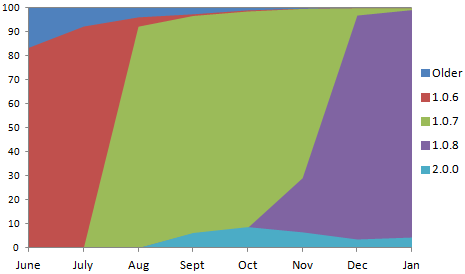
The above chart shows the adoption of each version of the BlackBerry PlayBook each month as seen from downloads of the game Pixelated. Unlike the slow OS adoption on BlackBerry smartphones, the graph shows much steeper slopes for adoption of each new OS version for the PlayBook.

January saw an amazing 99.1% of users running OS 1.0.8 (or higher). These numbers should give us a feel for the adoption of OS 2.0 when it is released later this month. In short there will be no reason to support anything earlier then OS 2.0 pretty much as soon as it is released.

This data was taken from downloads of the popular PlayBook strategy game Pixelated. Data shown on the chart is from the beginning of June 2011 through the end of January 2012.

Some growth in newer OS versions

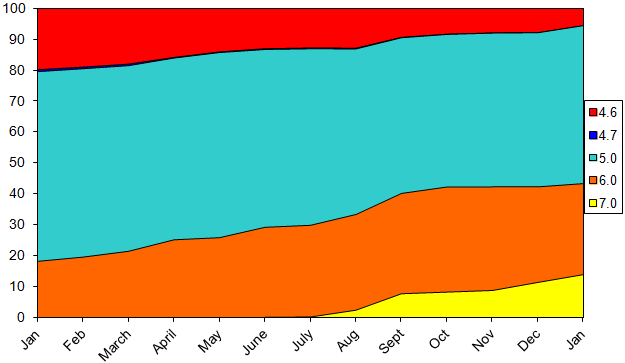
For the first time in a few months there has been some meaningful movement in this graph. The use of OS 7 is up to 13.9% while use of OS 6 has also improved after being flat since last October.

The percentage of users on OS 5.0 or higher has increased by more then two percent and is now up to 94.5% of all devices. Last January only 79.6% of users were running an OS at 5.0 or higher. With the percentage of active users on 4.x dwindling the recent update to the Binary Clock app only supported OS 5.0 and higher, and many other apps will probably be taking that approach in the near future as well.

This data was taken from downloads of the popular BlackBerry strategy game Pixelated. Data shown on the chart is from the beginning of January 2011 through the end of January 2012.